About the project
As part of a group project in the Digital Communication program at Metropolia University, we
developed Save Elli using the Google Design Sprint framework. The course aimed to explore
app-based solutions for combating climate change.
Concept Overview
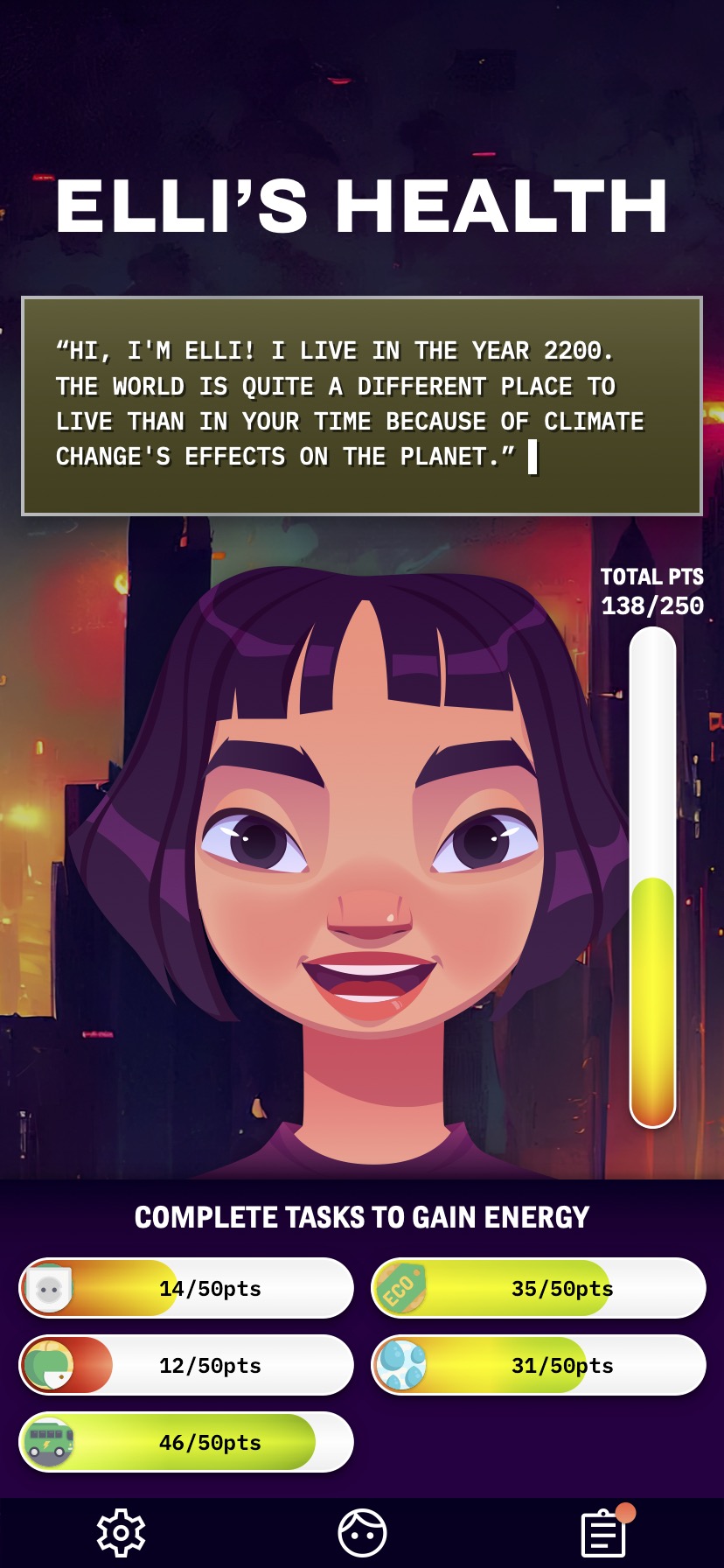
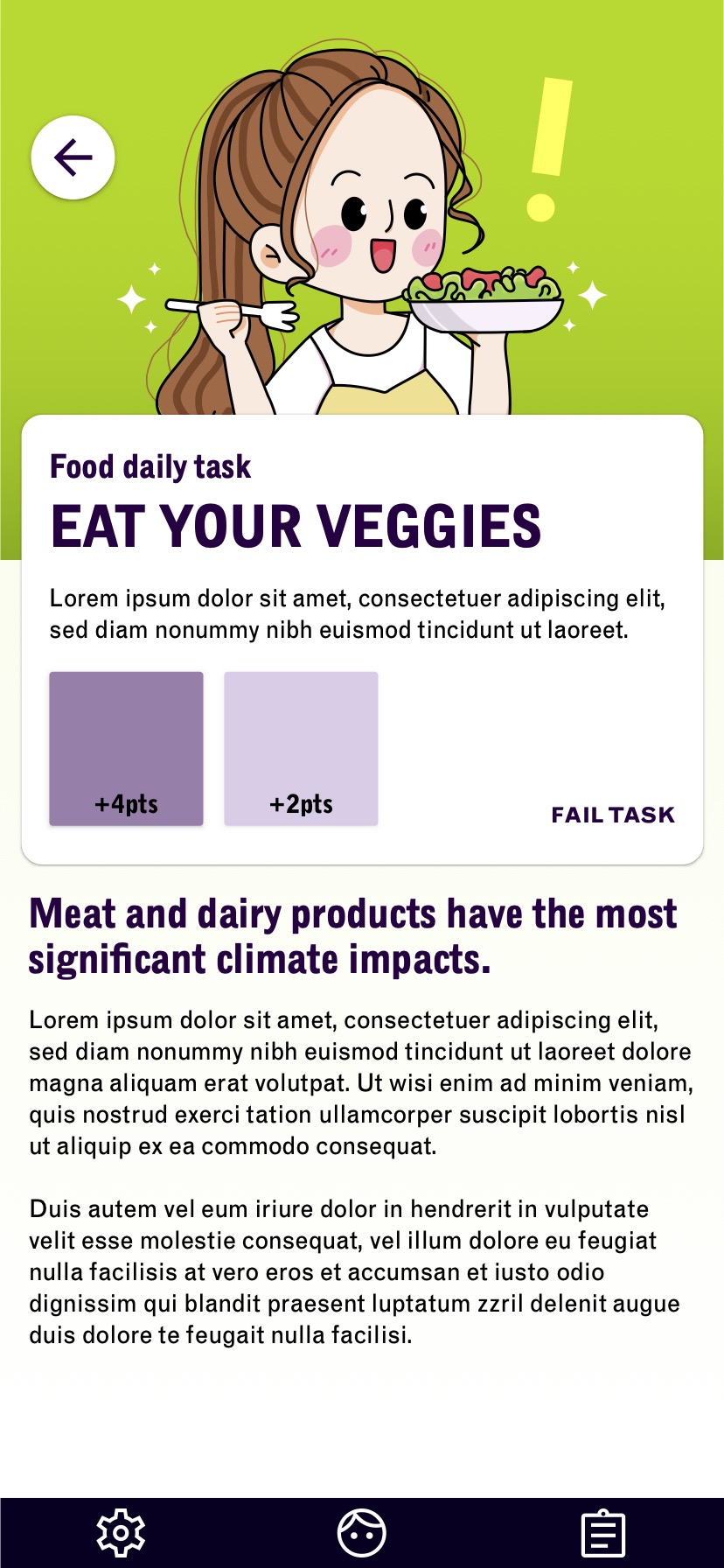
In Save Elli, players complete real-world actions recommended by the game to foster sustainable
habits. Logging these actions improves Elli's health, a character in the year 2200. Elli's
well-being mirrors the player's choices, visualizing the long-term effects of climate-conscious
decisions. The goal is to motivate eco-friendly choices by showing players the impact they have
on Elli's survival.
The User Interface Design
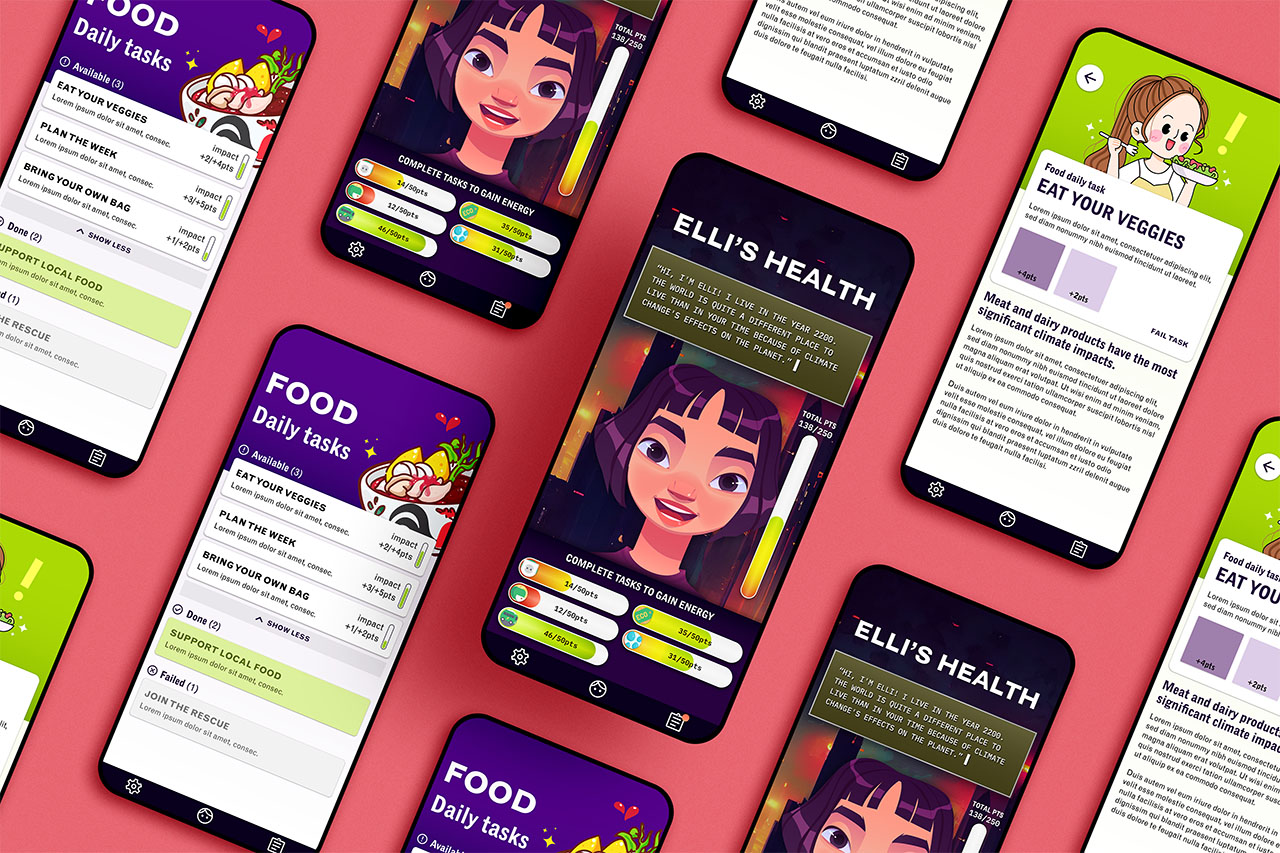
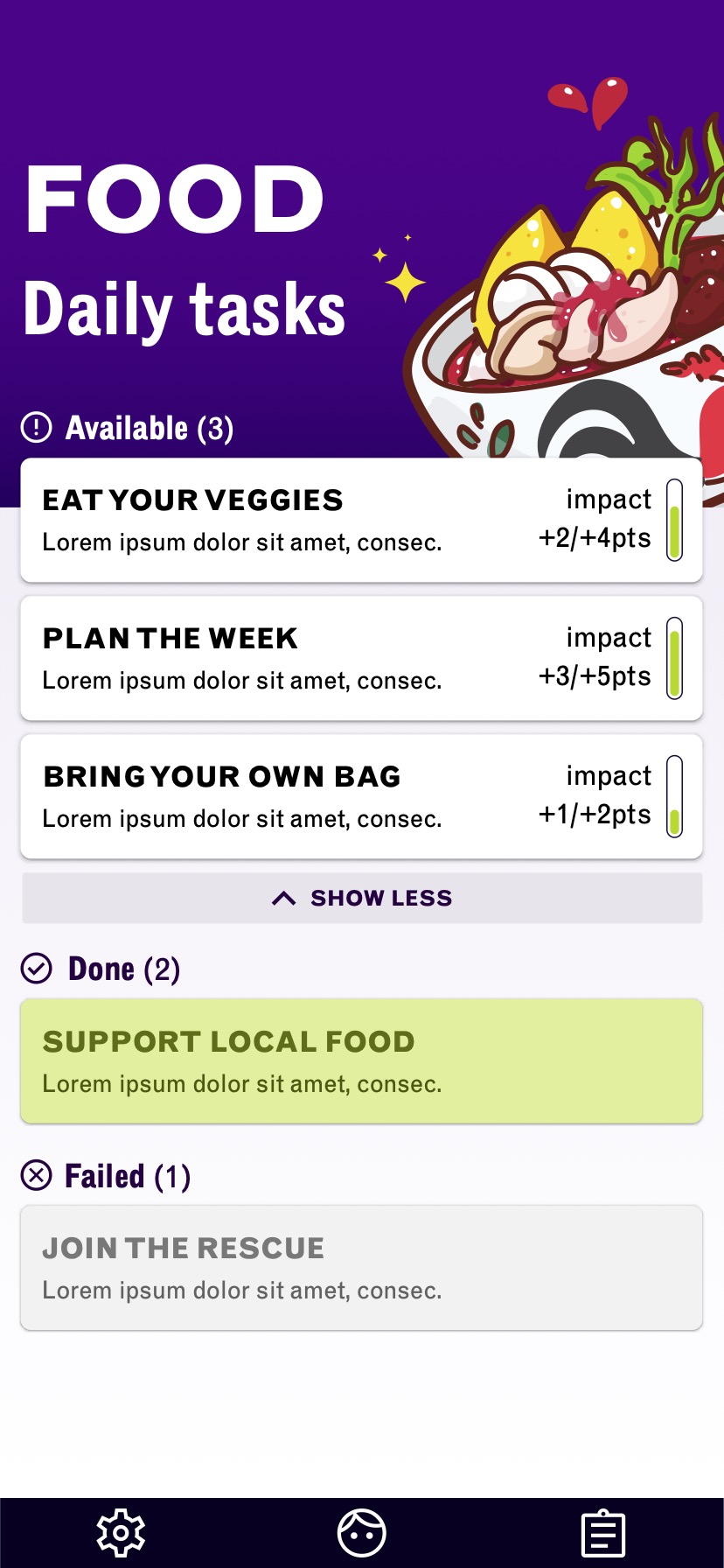
I was responsible for designing the visual prototype of the application, including the user
interface
and the app's overall look and feel. The visual direction aims to be engaging and intuitive,
appealing to users with varying familiarity with mobile apps. The screens shown in the
accompanying
images reflect my design work, including a clean, colourful layout and a friendly interface that
guides users through their tasks and the narrative of Elli's world.
Design Process
We developed the game following the Google Design Sprint, moving through brainstorming, ideation,
prototyping, and testing in five days. We mapped user journeys and challenges consumers face
when
making eco-friendly decisions, reflected in the game's daily tasks.
We used storyboarding and persona development to identify target users and refine our app's
narrative
and gameplay. This process, documented in the accompanying images, was essential in shaping the
final design and user interface.
Background Research
We conducted interviews to understand users' attitudes toward climate change and digital habits.
Questions explored beliefs about climate change, prior use of environmental apps, and openness
to
such tools. The responses revealed motivators and barriers that directly shaped Save Elli’s
design
and content.
User Testing and Feedback
The initial user tests revealed valuable insights about how players interacted with the app. Some
users needed clarification on whether the tasks were intended for Elli or for them, suggesting
the
need for more precise instructions. Additionally, the game's introductory section was often
skipped
or not fully understood, so we revised it by breaking the information into smaller steps with
visuals.
Some users noted the app felt tailored to children, leading us to reassess our target audience
and
potentially focus on younger users. Others indicated that the environmental facts were too
basic,
suggesting our advanced users might appreciate more in-depth content. These valuable insights
have
guided us in refining how we communicate and shaping the app's features.
Conclusion
The final prototype was a product of collaborative design, research, and iterative feedback
loops.
Through the game, users are encouraged to adopt eco-friendly habits, making a tangible
difference in
their lives and contributing to a better future. We hope Save Elli can be a fun and educational
tool
that inspires long-term, sustainable change.